
Description
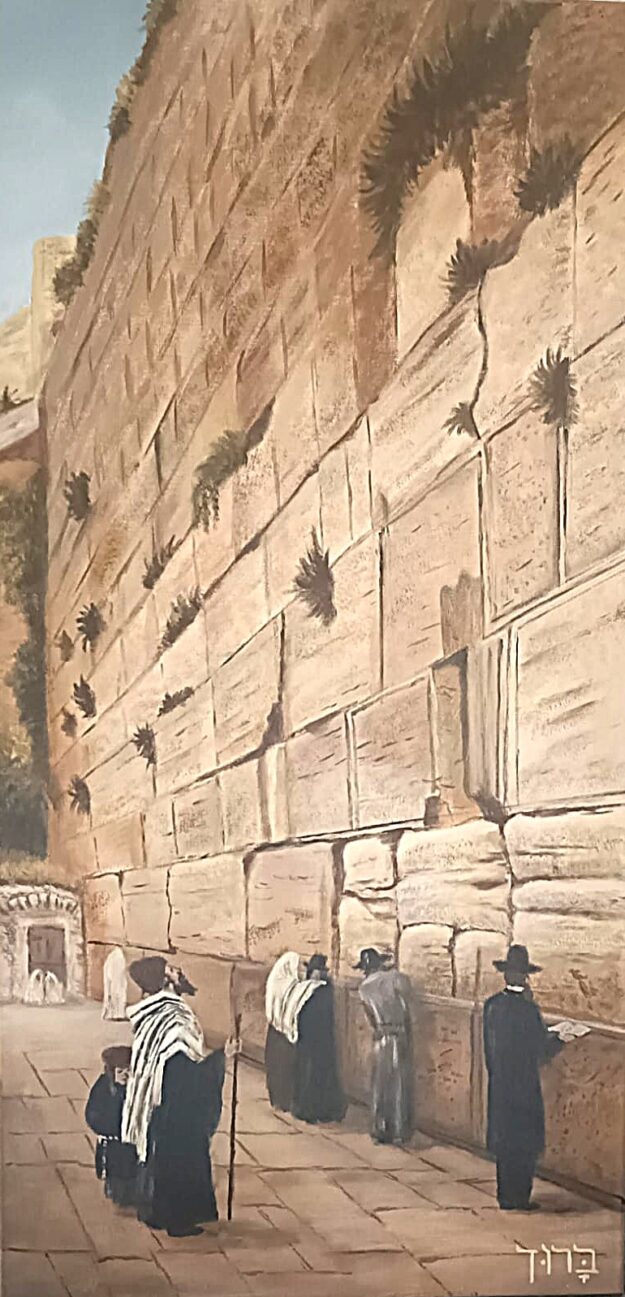
Western Wall tells a story without words, unfolding through layers of texture and tone that whisper of lives and landscapes unseen. In this powerful architectural and human study, Barend Vermaak captures the monumental scale of one of the world’s most sacred sites, yet he does so with a surprising intimacy. The perspective is tilted upward, emphasizing the sheer height and weight of the limestone blocks, which seem to stretch toward the heavens. This compositional choice creates an immediate sense of awe, placing the viewer at the very base of history. The figures at the foot of the wall are rendered with a quiet dignity, their presence providing a vital human scale to the immense stone structure. They are not merely subjects, but participants in a dialogue that has spanned millennia, their postures reflecting a range of internal states from deep supplication to quiet contemplation.
The emotional core of the painting is steeped in a sense of collective memory and spiritual gravity. There is a profound feeling of unease and tension held within the cracks of the stones, balanced by the visible peace of the worshippers. The artist masterfully conveys the weight of the past, showing how the wall acts as a vessel for the hopes, griefs, and whispers of countless generations. The atmosphere is thick with a kind of hallowed silence, a stillness that feels heavy and charged. Vermaak’s ability to capture the specific quality of light in this region is remarkable; the sun seems to bake the stone, creating a warmth that radiates from the canvas and suggests the physical heat of the desert.
Technically, the work is a triumph of texture and layering. The artist uses the acrylic medium to build up a surface that feels almost as tactile as the stone itself. Each block is individualised, with its own unique pattern of erosion, pitting, and shadow, suggesting the slow, relentless work of time. The use of negative space in the upper left corner, where the sky meets the top of the wall, provides a necessary visual release from the density of the masonry. The brushwork in the figures is more fluid and gestural, contrasting with the structured, rhythmic application of paint in the wall. This creates a beautiful tension between the permanence of the stone and the fleeting, transitory nature of the human lives that pass before it.
The colour palette is a sophisticated exploration of earth tones, ranging from pale sands and warm beiges to deep, burnt umbers in the shadows. These hues are not static; they shift and change as the light moves across the uneven surface of the wall, creating a dynamic visual experience. The occasional pops of dark clothing on the figures and the green of the plants clinging to the crevices provide essential focal points, preventing the monochromatic scheme from becoming overwhelming. The psychological effect of these colours is one of grounding and stability, reflecting the enduring nature of the site itself. It is a palette that speaks to the very dust of the earth and the enduring journeys of those who walk upon it.
Vermaak connects this specific location to echoes of humanity that transcend borders and creeds. The act of leaning against a wall, of placing a hand upon a cold surface to find a connection to something greater than oneself, is a gesture that resonates across cultures. It speaks to the common threads of life—the need for sanctuary, the desire to be heard, and the search for meaning in the face of the infinite. The wall becomes a metaphor for the barriers we build and the foundations we rely upon, a physical manifestation of the endurance of the human spirit.
The composition is carefully structured to lead the eye from the foreground figures, up the vertical lines of the masonry, and toward the sliver of sky at the top. This movement suggests a transition from the earthly to the divine, from the physical to the metaphysical. The plants growing from the cracks are a vital inclusion, representing the persistence of life in even the most improbable places. They serve as a reminder that even within the weight of history and the rigidity of stone, there is always room for growth and renewal.
In the presence of such ancient endurance, one cannot help but feel the brevity of a single lifetime. The painting invites us to pause and consider our own place within the vast tapestry of time. What are the walls we lean on when the world feels too heavy, and what silent prayers do we leave behind in the cracks of our own history?
Artist: Barend Vermaak




Reviews
There are no reviews yet.